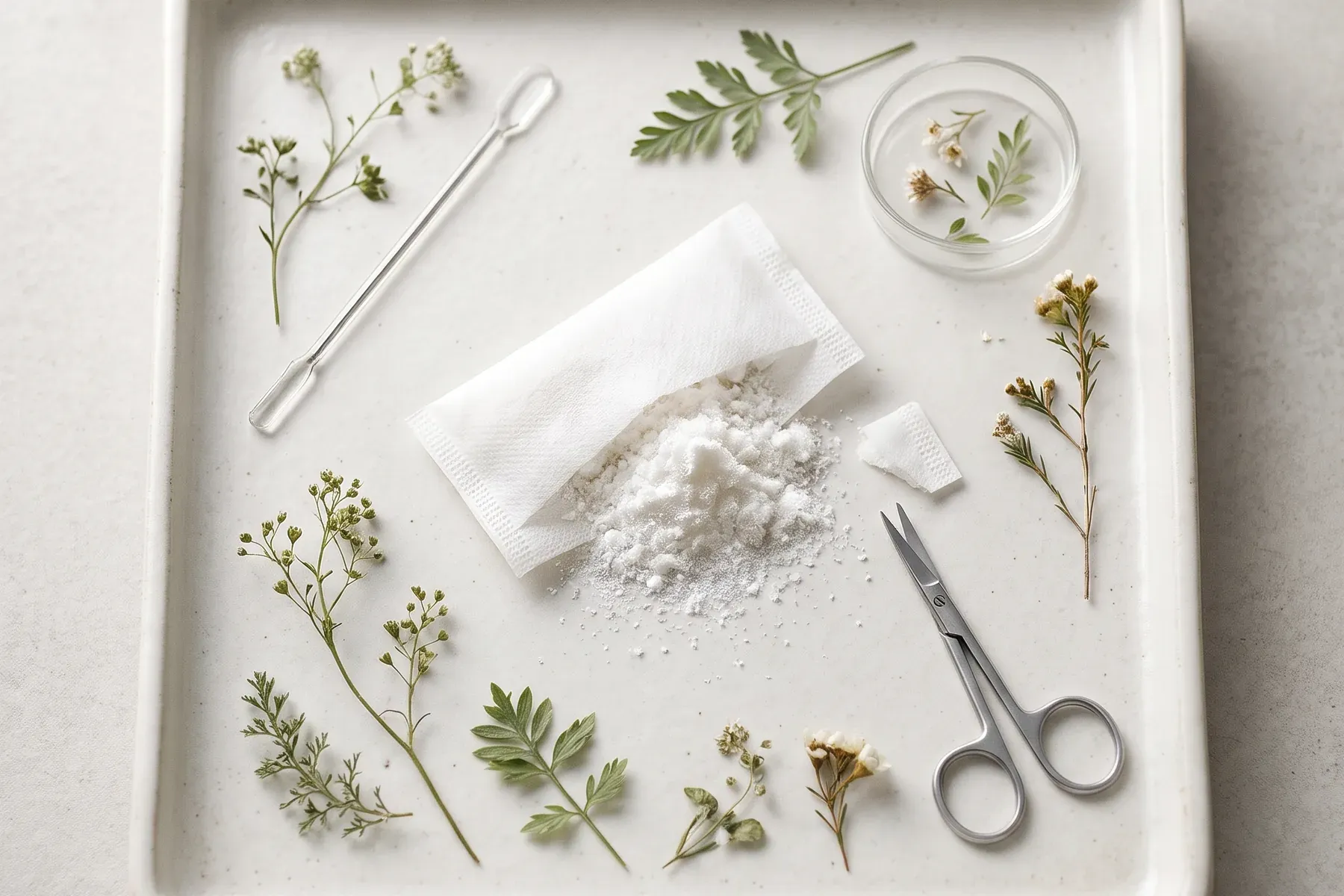
The additives are the same ones permitted in food in Canada, which is why the lists read like a cookie package. The ingredients guide goes through each one.
So is it biodegradable
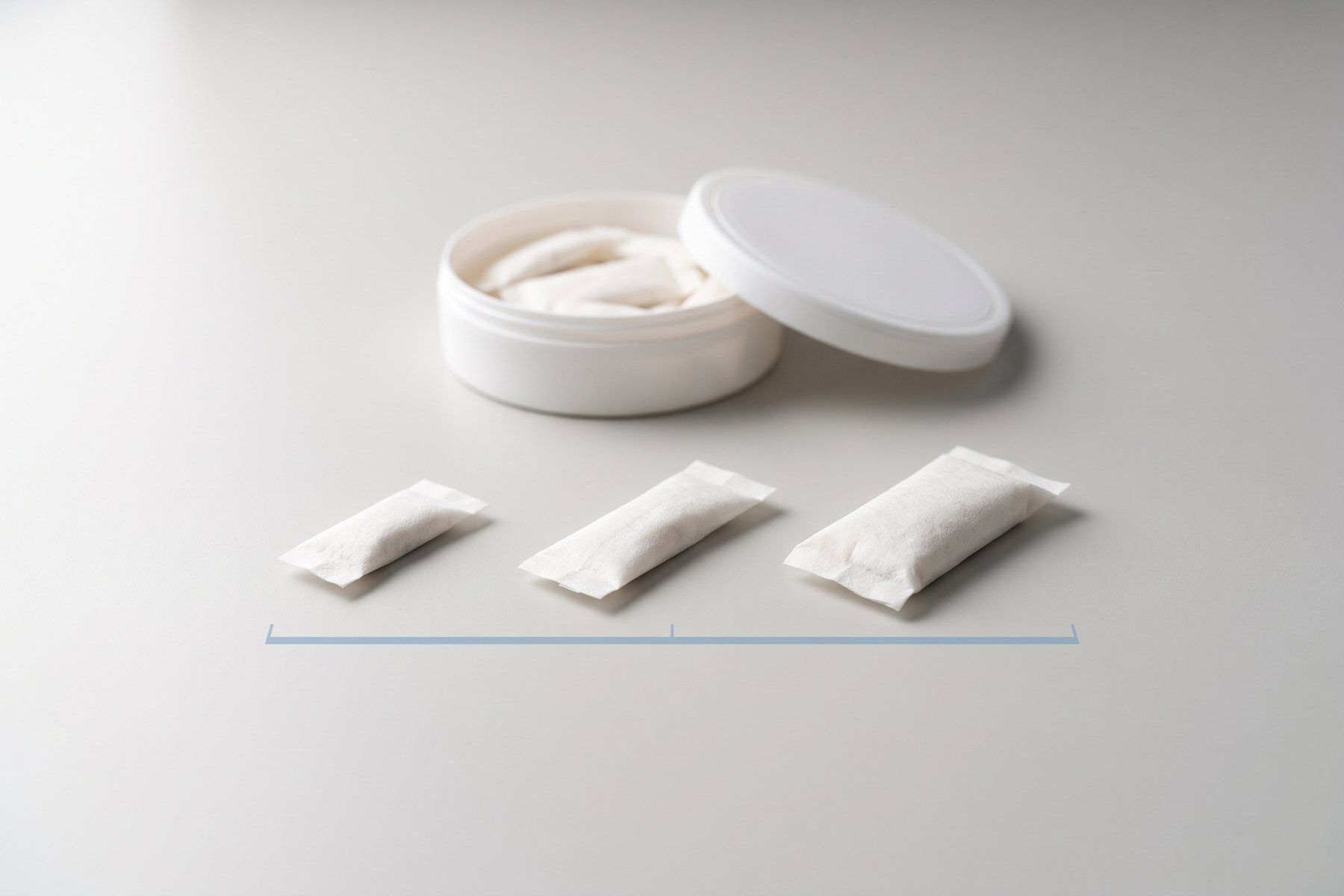
The fibre bag and the cellulose filler are plant material and will break down the way paper does. That is the biodegradable part. The rest of the list is not: a used pouch still contains nicotine, flavourings, sweeteners and salt. How much nicotine stays behind depends on how long the pouch was in; a pouch used for twenty minutes typically still holds a large share of what it started with.
That residue is why a used pouch should not go in the green bin, a backyard composter or a municipal organics program. Compost is meant to become soil, and nicotine is not something to put in it. It is also why a pouch should never be flushed: the bag does not dissolve, and the nicotine goes into the water.
Where a used pouch goes
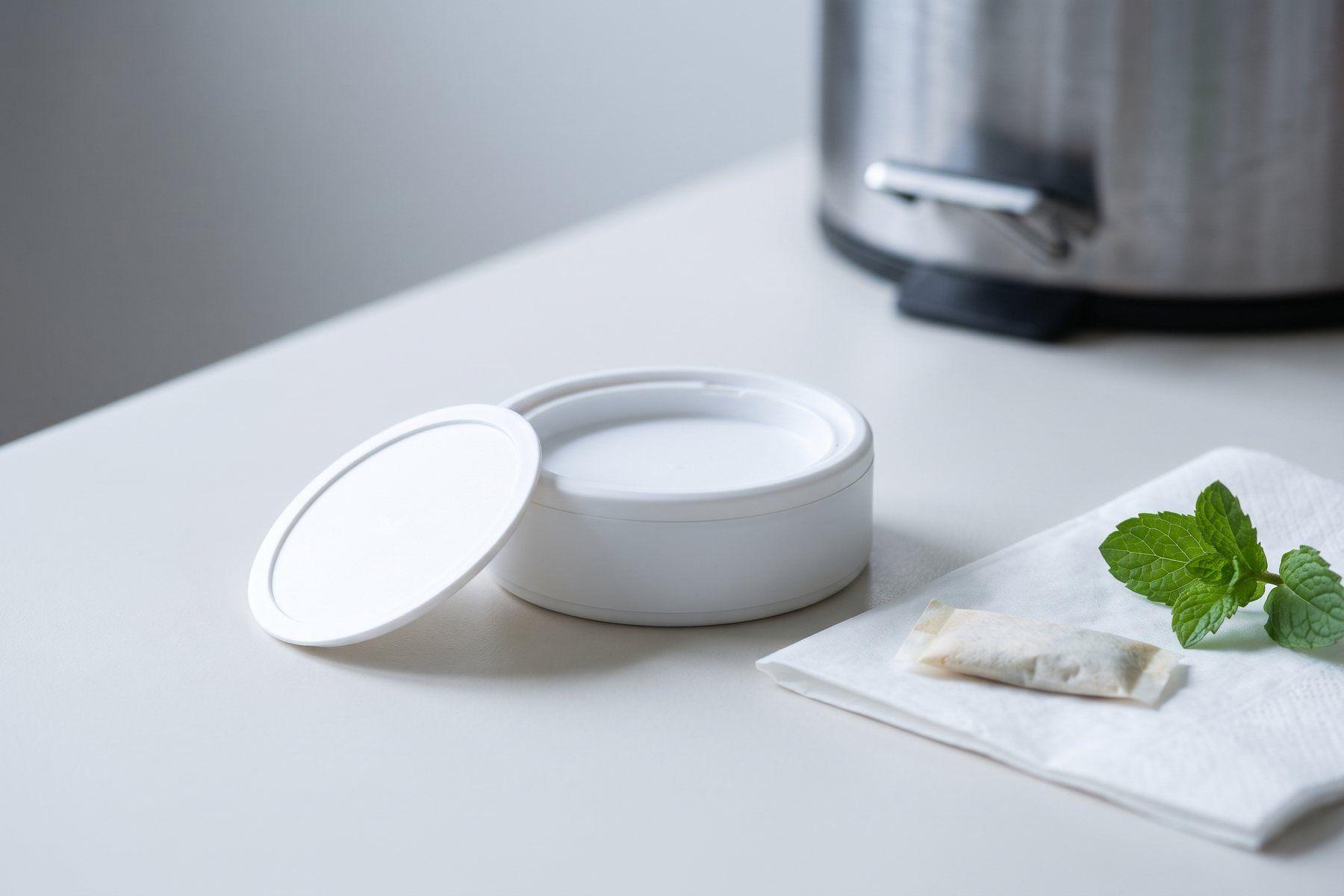
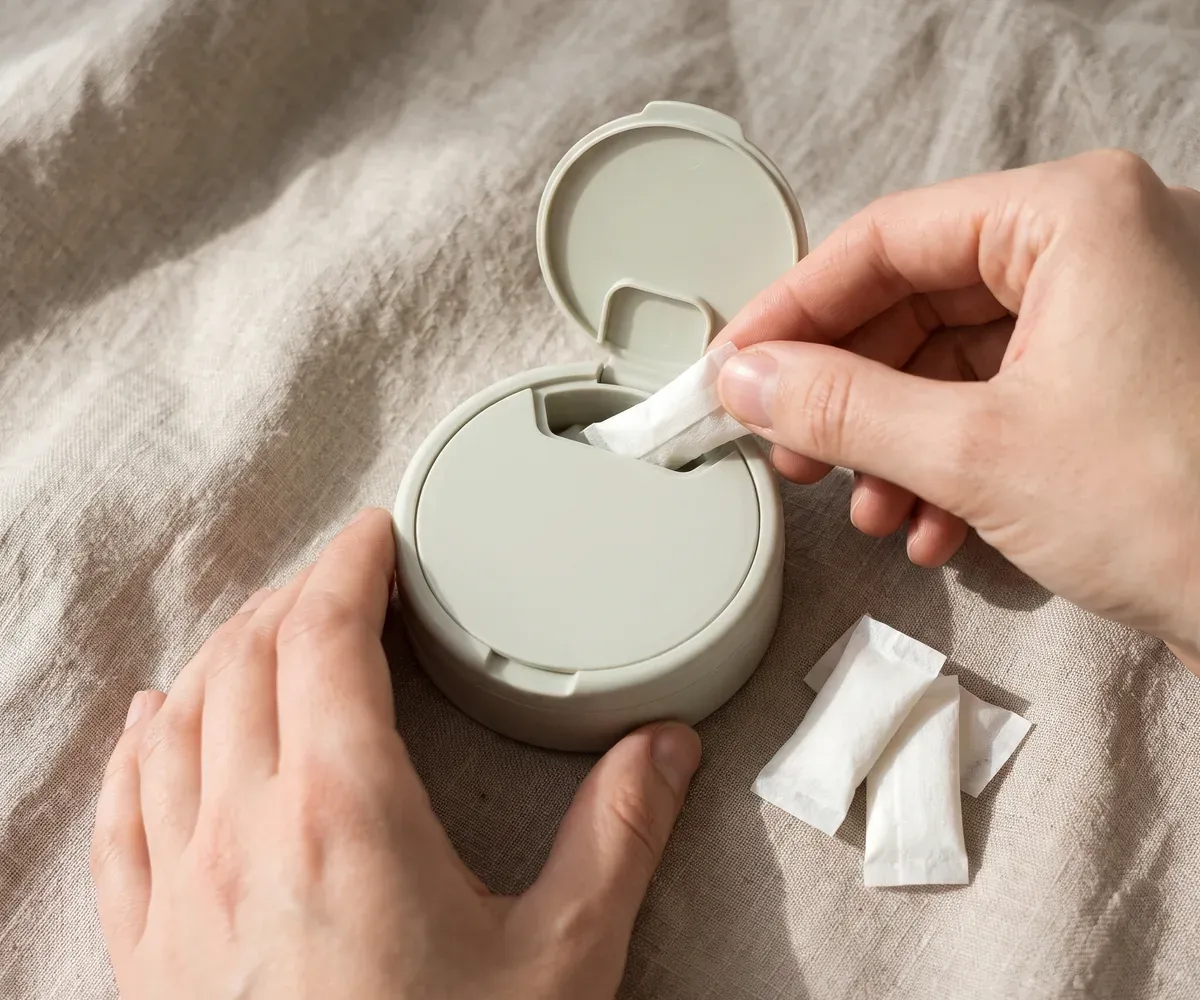
Garbage. Wrap it in a tissue or drop it in the catch lid and empty that into the garbage. Nearly every can has a compartment in the lid for exactly this, so the pouch does not have to go in a pocket. Why a used pouch never goes back in with the fresh ones is in can you reuse a nicotine pouch?, and placing and removing one in how to use nicotine pouches.
Away from children and pets. A used pouch still contains enough nicotine to matter if a small child or a dog swallows it. Empty the catch lid into a bin with a lid, and do not leave a used pouch on a plate or a nightstand.
Not into the environment. A pouch dropped on the ground will take months to break down and releases its nicotine into the soil as it does. It is litter in the same way a cigarette butt is, with the same small size and the same habit of ending up under park benches.
What to do with the can
The can is the part that can be recycled, and it is the part people throw away. Most pouch cans are polypropylene, marked with the resin code 5 or "PP" inside a triangle on the base. Rigid polypropylene containers are accepted in most curbside recycling programs in Canada, from Toronto's blue bin to Recycle BC's depots and curbside collection, but programs differ by municipality, and the city's waste lookup tool settles it for your address. The lid is usually the same plastic; where it is a different material, the code tells you.
Before it goes in the blue bin: empty the catch lid, tip out any dry filler, and leave the paper label on (it is accepted, and peeling it off adds nothing). A can with a used pouch inside goes in the garbage, because a contaminated item is rejected at sorting.
Some brands print the resin code only on the lid, and a few use cardboard outer packaging for multi-packs, which goes with paper and cardboard. The code is on the base of the can.
How long a pouch lasts before you open it
The preservative and the sealed can give most pouches a shelf life of 12 months from production (36 of the 39 products sold to Canada that state one); the rest state 18 or 24. The best-before date is printed on the base. Past it, a pouch is drier and tastes flatter rather than unsafe, but the used pouches are still garbage. The guide on how long pouches last covers the opened can.