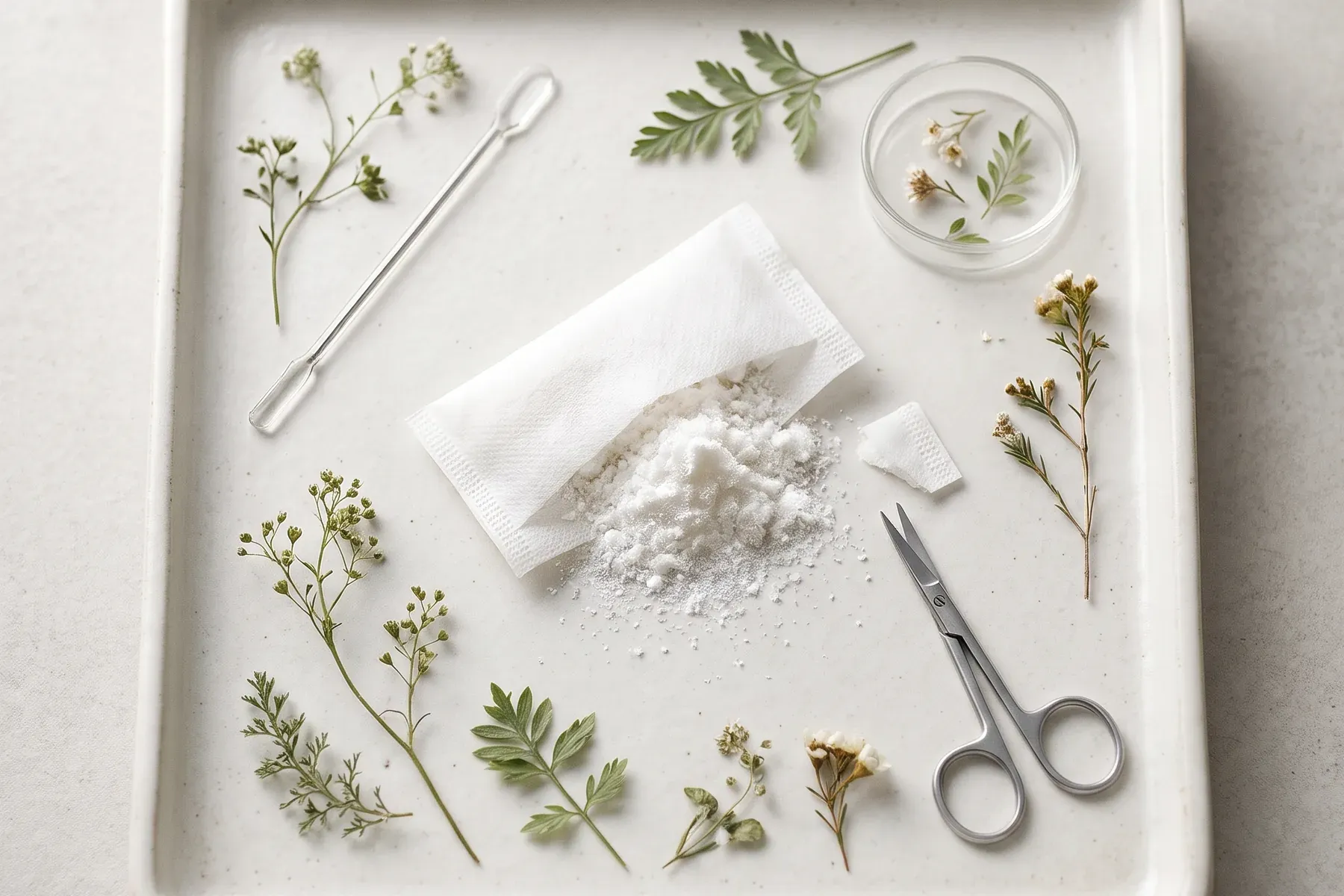
The E-numbers are the same additives that appear on a packet of biscuits, and they are listed in the European Commission's food additives database under the same codes. The ingredients guide takes them one at a time.
So is it biodegradable
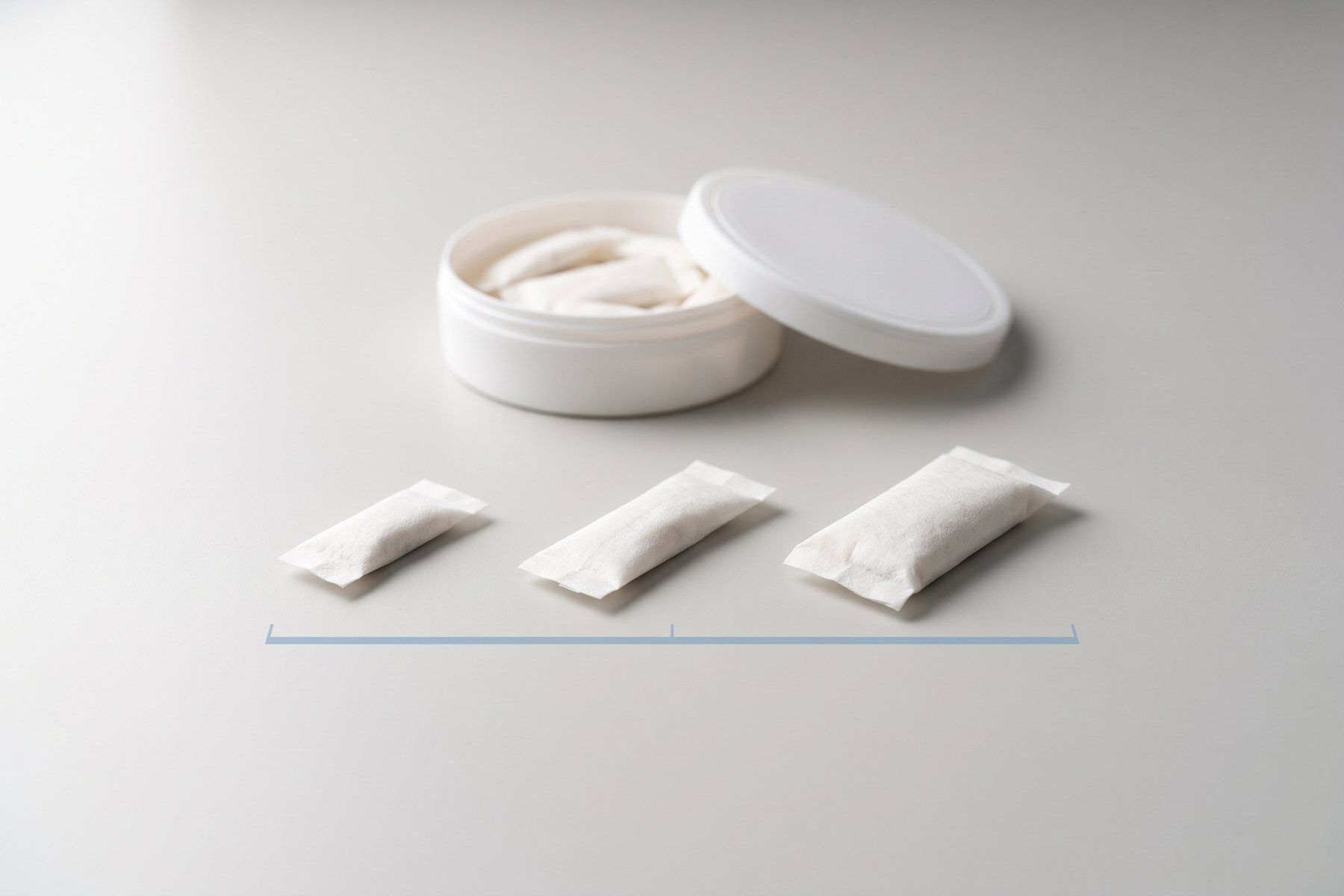
The fibre bag and the cellulose filler are plant material and break down the way paper does. That is the biodegradable part. The rest of the list is not: a used pouch still holds nicotine, flavourings, sweeteners and salt. How much nicotine remains depends on how long the pouch was in, and a pouch taken out after twenty minutes typically still carries a large share of what it started with.
That residue is why a used pouch has no place in the brown bin or a compost heap. The brown bin becomes compost and compost becomes soil, and nicotine does not belong in either. It is also why a pouch should never go down the toilet: the fleece does not dissolve, it belongs with the wet wipes and cotton buds that block Irish sewers, and the nicotine ends up in the water.
Where a used pouch goes
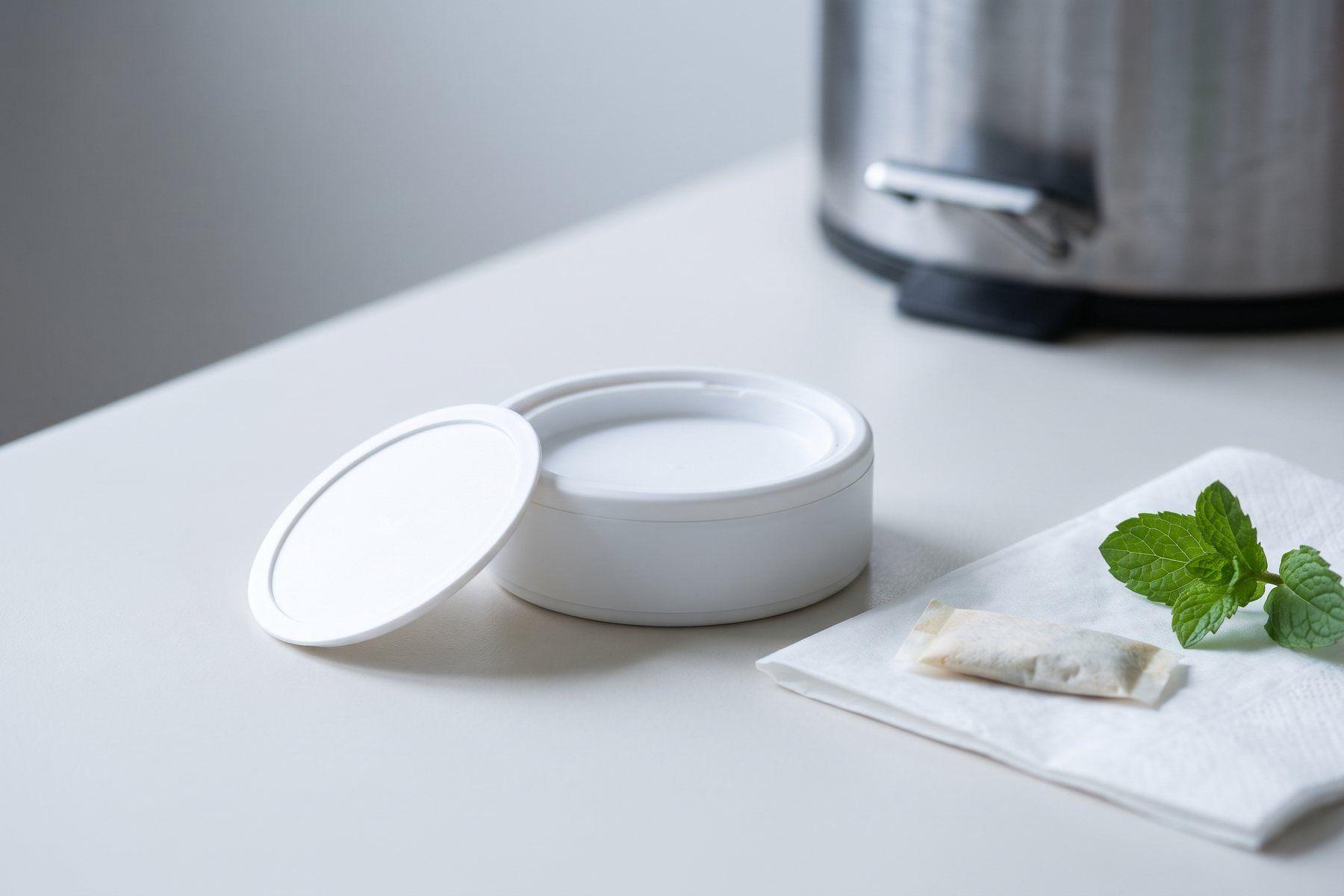
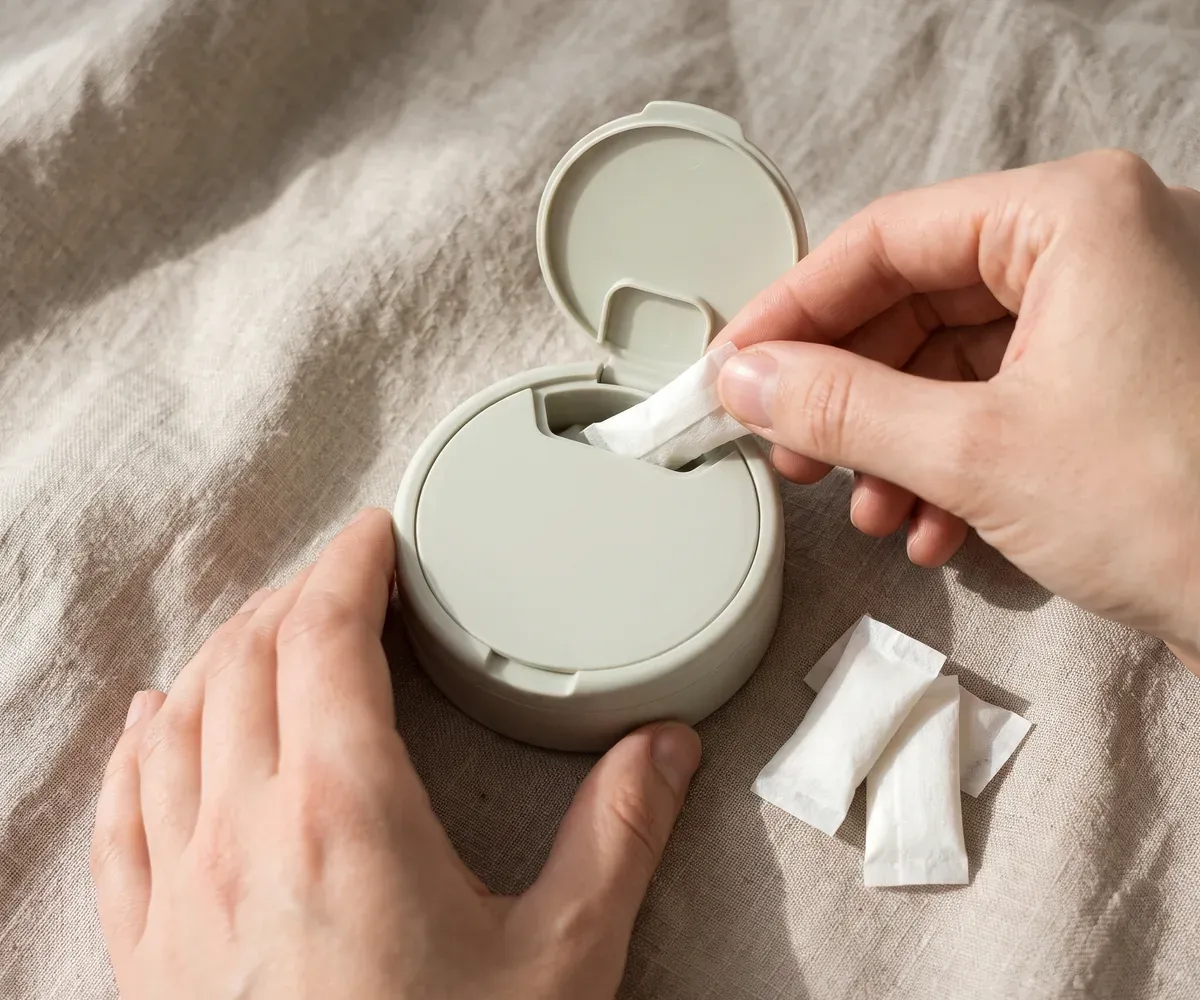
The black bin. General waste, whichever company collects yours. Wrap the pouch in a tissue or drop it into the catch lid on the can and empty the lid into the bin at home. Nearly every can has that compartment in the lid for exactly this purpose, so a used pouch never has to go in a pocket. Why a used pouch never goes back in with the fresh ones is in can you reuse a nicotine pouch?, and placing and removing one in how to use nicotine pouches.
Out of reach of children and pets. A used pouch still holds enough nicotine to do harm if a toddler or a dog swallows it. Empty the catch lid into a bin with a lid on it, and do not leave a used pouch on a saucer or a bedside locker.
Not on the ground. A pouch dropped outside takes months to break down and gives up its nicotine into the soil as it does. It is litter in the same sense a cigarette butt is, the same size, and with the same habit of collecting under benches and along the seafront.
What to do with the can
The can is the part that can be recycled, and it is the part most often thrown in the black bin. Pouch cans are rigid plastic packaging, usually polypropylene, marked with the resin code 5 or "PP" in a triangle on the base. Since 2021 every household recycling collection in Ireland takes all plastic packaging, rigid and soft, as long as it is clean, dry and loose, which is the MyWaste.ie rule for the green bin. The lid is usually the same plastic and goes in with it.
Before the can goes in the green bin: empty the catch lid, tip out any loose dry filler, and leave the paper label where it is. A can with a used pouch still inside is not clean, and a dirty item is pulled out at the sorting plant, so that one goes in the black bin.
Some brands put the resin code only on the lid, and a few use a cardboard sleeve for multipacks, which also goes in the green bin, flattened.
How long a pouch lasts before you open it
The preservative and the sealed can give most pouches a shelf life of 12 months from production: 300 of the 365 products on the Irish shelf that state one. The rest state 18, 24 or, for six products, 48 months. The best-before date is printed on the base. Past that date a pouch is drier and tastes flatter rather than unsafe, and the used pouches are still general waste. The guide on how long pouches last covers the opened can.